

The Independence Palace of Ho Chi Minh City: History, Architecture, and Visitor Guide
If Saigon’s roaring scooters represent its relentless modern energy, Independence Palace is the quiet sanctuary where history demands to be felt. Nestled behind sprawling manicured lawns right in the city center, this iconic landmark feels like a pristine time capsule straight from another era. Inside, opulent presidential suites and intact war rooms remain remarkably preserved, offering a rare, intimate look at the pivotal events that shaped the nation. If you want to truly understand the soul of Ho Chi Minh City beyond the street food and night markets, this mid-century masterpiece is the one destination that belongs at the top of your itinerary.
What is the Independence Palace in Ho Chi Minh City?
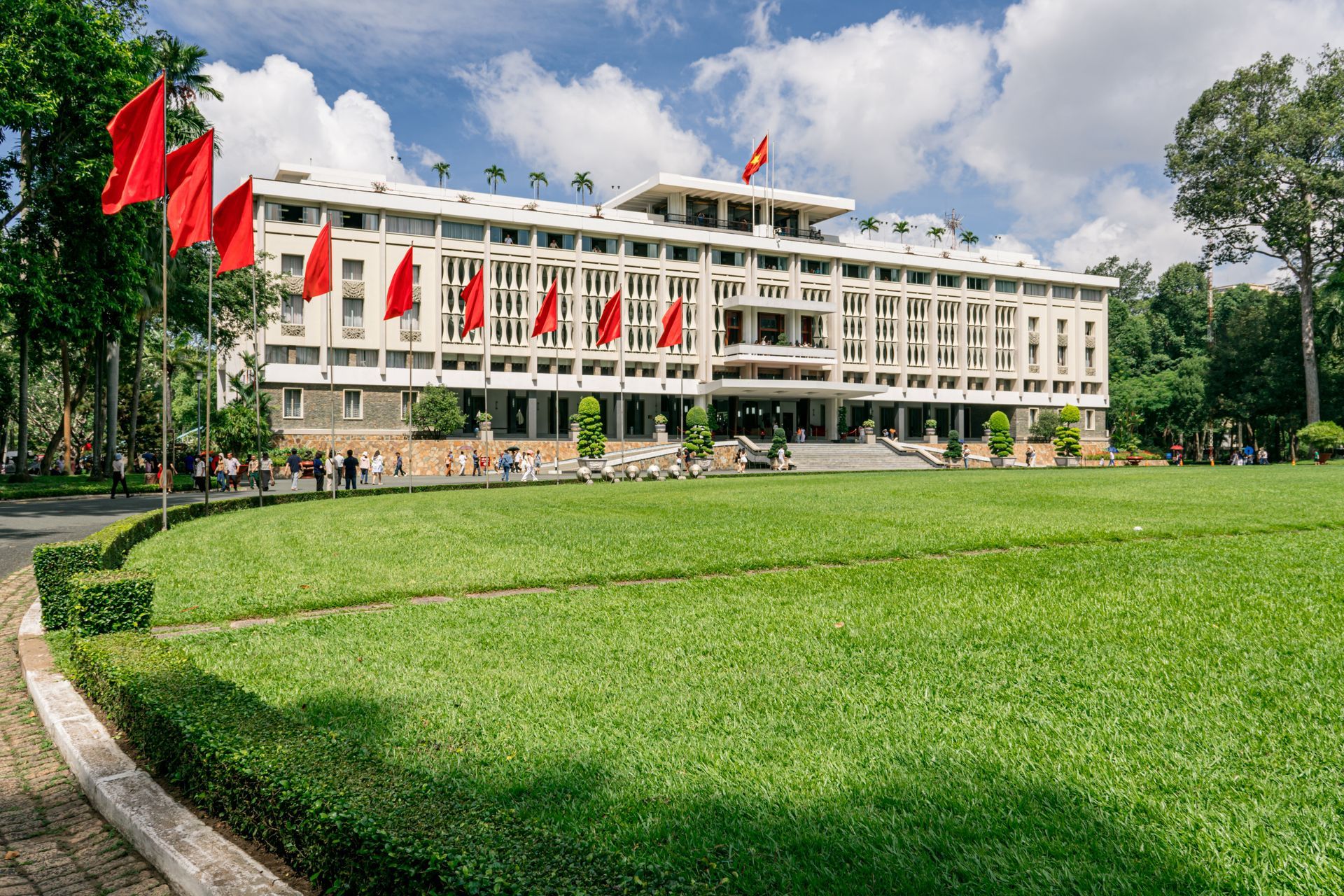
The Independence Palace (Dinh Doc Lap), also known as the Reunification Palace (Dinh Thong Nhat), is the historic presidential palace of South Vietnam located at 135 Nam Ky Khoi Nghia Street, District 1, Ho Chi Minh City. It is famous as the site where the Vietnam War ended on April 30, 1975, when a tank of the Vietnamese Liberation Army famously crashed through its main gate.
Built between 1962 and 1966 by architect Ngo Viet Thu, it is now a Special National Relic preserved exactly as it was in 1975 and is one of the most visited historical landmarks in Vietnam.
1. The History: From Norodom Palace to Independence Palace
Built on the former site of the colonial-era Norodom Palace, Independence Palace was designed by renowned architect Ngo Viet Thu. Construction ran from July 1, 1962, to its inauguration on October 31, 1966. It subsequently served as the executive residence and office for Nguyen Van Thieu, the second President of the Republic of Vietnam, from October 1967 through April 21, 1975.
Today, the landmark stands as a historical symbol of national reunification. On April 30, 1975, tanks from the Liberation Army famously breached the palace's main gate, and raising the blue-and-red flag with a yellow star atop the roof officially marked the collapse of the Republic of Vietnam government.
2. Architecture: A Building That Spells Words
This is not just modernist architecture. Architect Ngo Viet Thu hid Eastern philosophy inside the concrete.
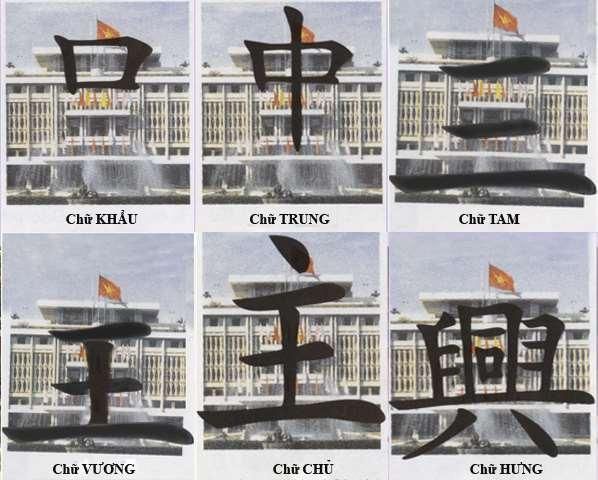
The entire ground plan is shaped like the Chinese character 吉 (Cát) meaning "Fortunate".
Every facade is a lesson:
- The Grand Balcony: The balconies of the 2nd and 3rd floors + portico + columns form the character 興 (Hưng) (Prosperity) - wishing eternal prosperity for the nation
- The Flag Tower: The vertical flagpole on top creates the character 中 (Trung) (Fidelity), the dot on top forming 主 (Chủ) (Master/Sovereignty)
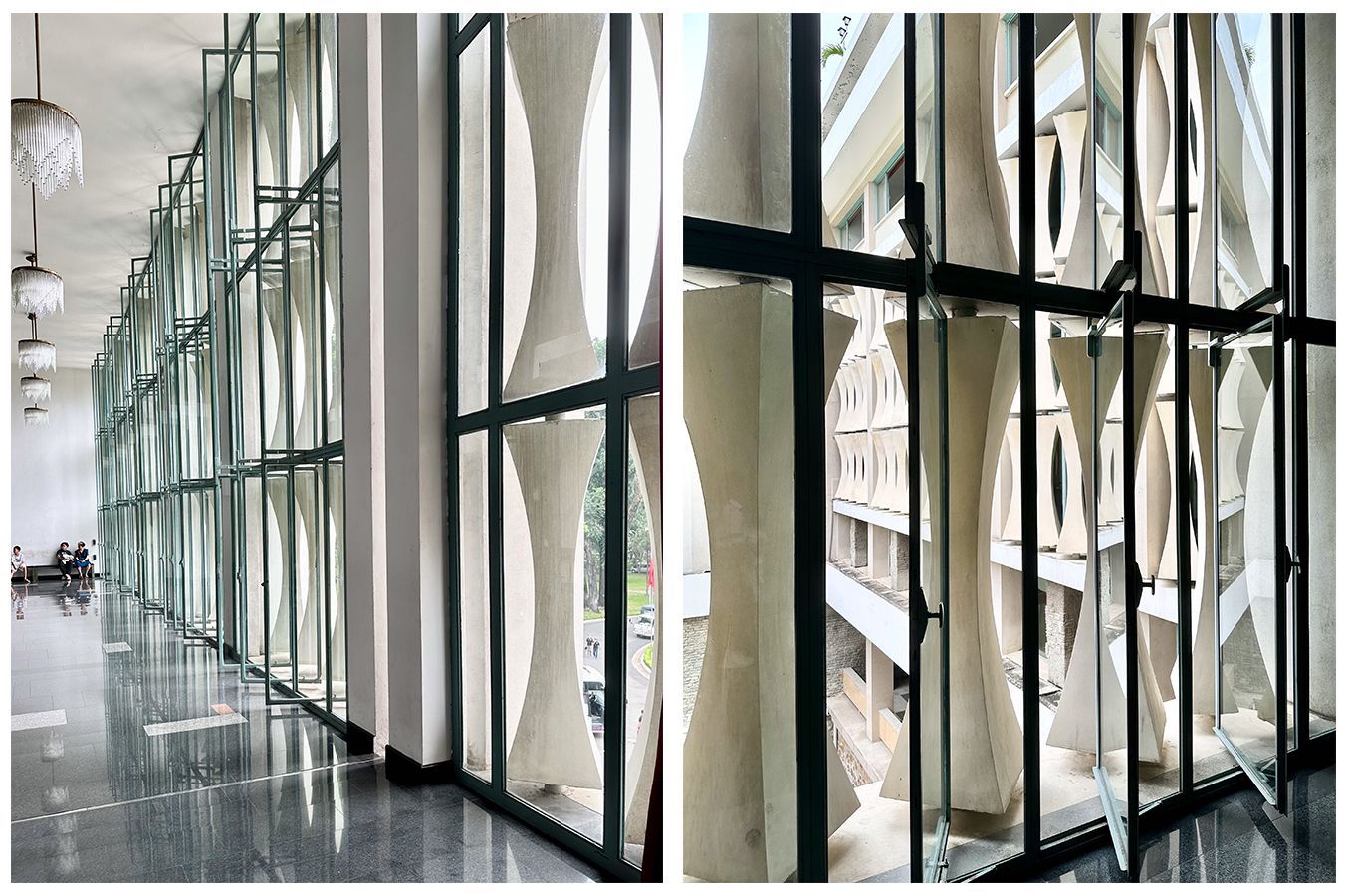
- The Stone Lattice: The exterior screen around the 2nd floor looks like bamboo but is actually stylized like the gates of the Imperial City in Hue. It filters sunlight while keeping the interior cool
- The Front Lawn: An oval 102m diameter lawn creates a sense of calm for visitors, and a half-moon lotus pond recalls traditional pagoda architecture.
The main T-shaped building is 26m high with 3 main floors, 2 mezzanines, 1 terrace, ground floor and basement.
The iconic "bamboo" feature framing the upper facade of Ho Chi Minh City's Independence Palace is a precast stone sunscreen (rèm hoa đá). Constructed between 1962 and 1966, this element bridges mid-century modernism with tropical climate responsiveness and Eastern philosophy.
3. What to See Inside: A Time Capsule of 1975
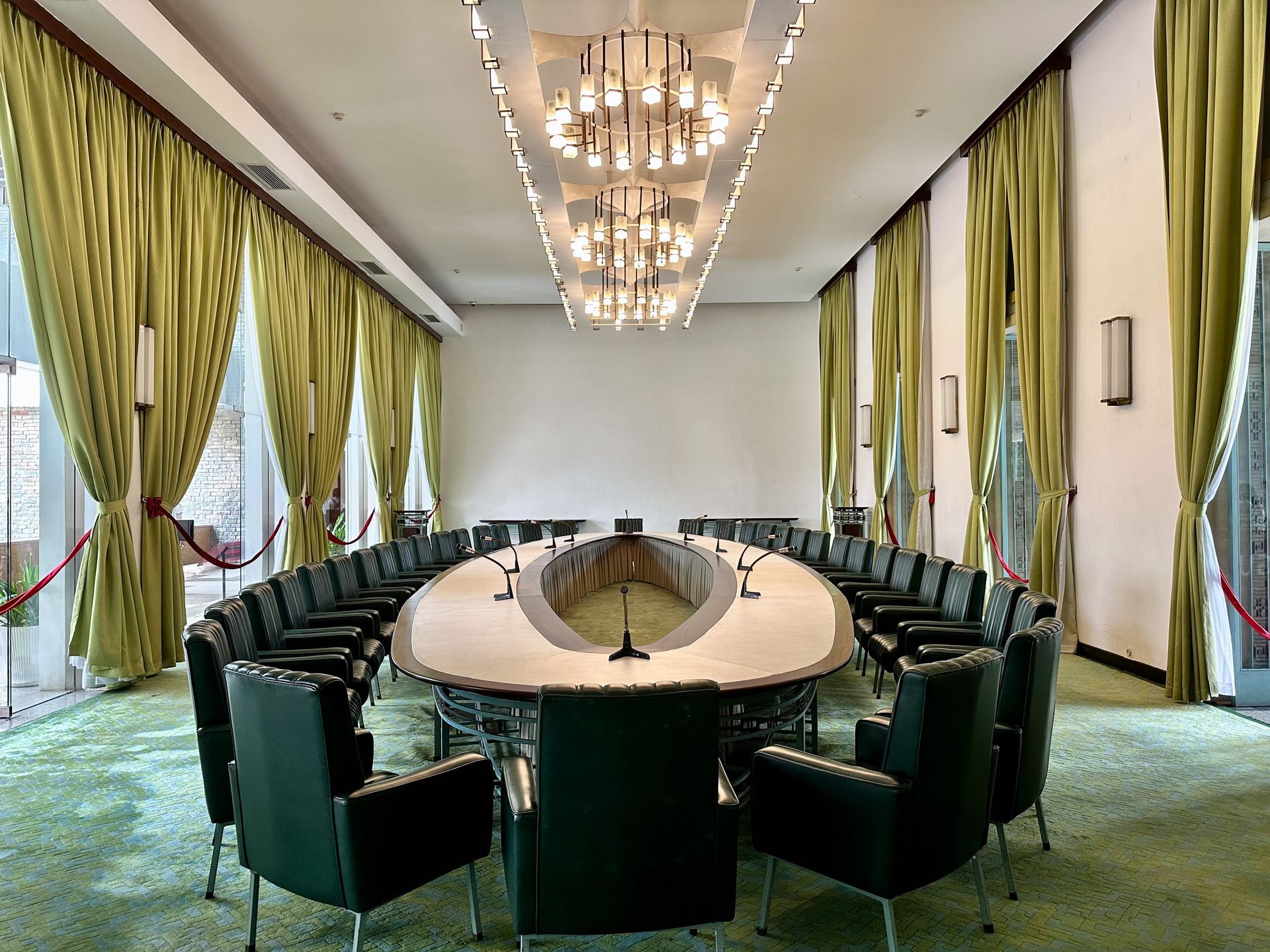
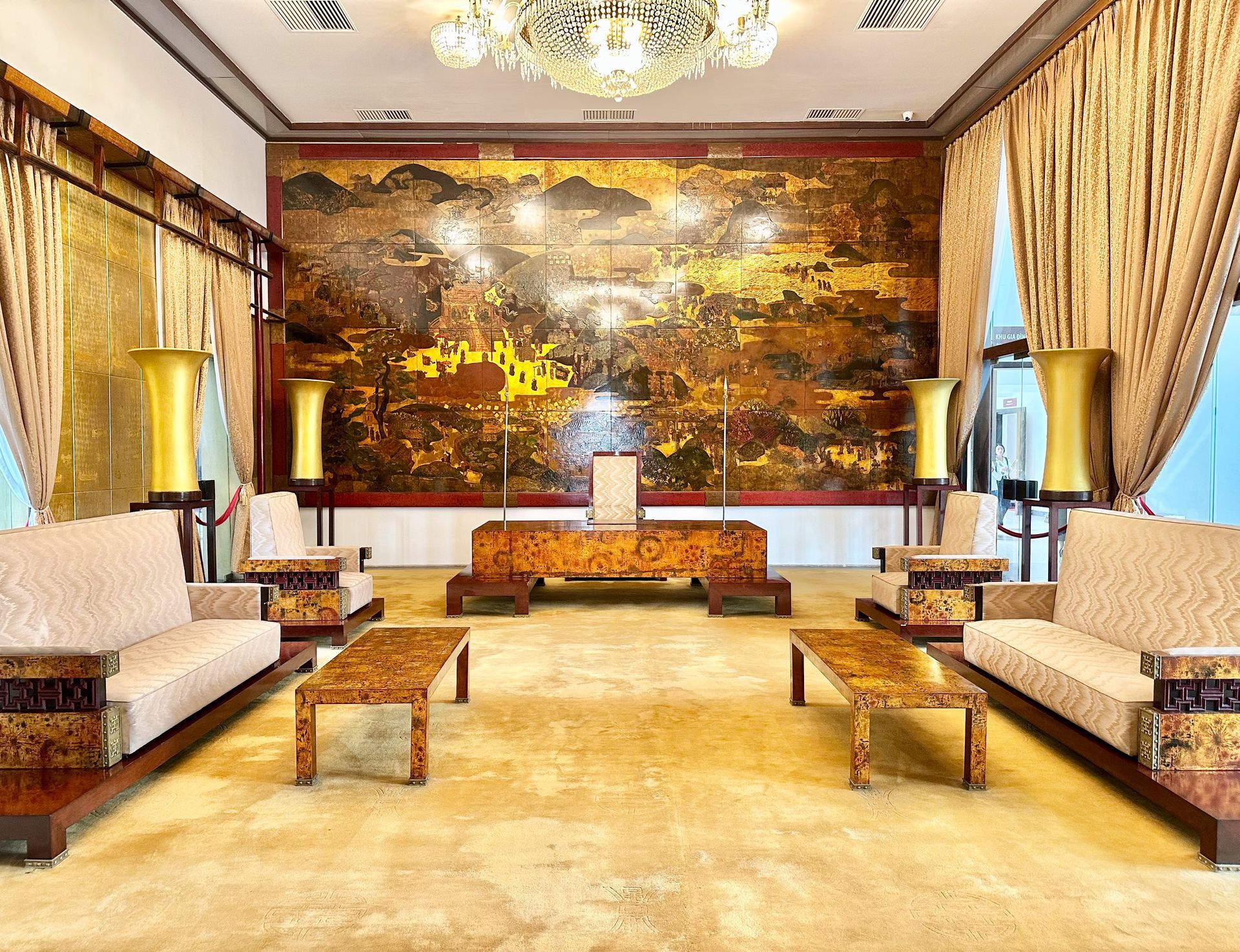
Unlike other palaces, everything was left intact. You get 100 rooms with original 1960s furniture, electronics, and war maps.
Must-see areas:
A. The State Floors (1st - 3rd Floor)
- Cabinet Room: Where the South Vietnamese government met.
- Banquet Hall & Presentation of Credentials Room: The heart of the palace for foreign diplomats.
- President's Living Quarters & Office: With private cinema, casino room, and study.
- Communication Center: With 1960s-era radio equipment.
B. The Basement War Command Center
The most atmospheric part. This is where President Nguyen Van Thieu directed the war. It includes the war map room, telecommunications center, and living quarters for staff that could survive a bombing.
C. The Grounds
Don't miss the octagonal pavilion on an earthen mound for relaxation, the historical jeep and tank replicas at the gate, and the exhibit "From Norodom Palace to Independence Palace 1868-1966".
4. Visitor Guide 2026-2027
What are the opening hours of Independence Palace?
The palace is open daily, including weekends and holidays.
- Ticket Gate at 135 Nam Ky Khoi Nghia: 7:00 AM - 6:00 PM
- Ticket Gate at 106 Nguyen Du: 8:00 AM - 4:00 PM
- Visiting Hours: 7:00 AM - 6:00 PM
How much is the ticket to Independence Palace in 2026?
Valid from August 1st, 2025:
- General Admission (Palace + Exhibit): Adults 80,000 VND, Vietnamese University Students 40,000 VND, Children 20,000 VND
- Palace Only: Adults 40,000 VND
- Electric Car Tour: 25,000 VND per ride
How long do you need there? 1.5 - 2.5 hours.
Best time to visit? Early morning at 7:00 AM to avoid tour buses and heat. The bamboo lattice creates beautiful light patterns before 10 AM.
You can check our tour HCMC: Half-day City Tour & Loa Loa Show
5. Why Independence Palace Still Matters?
Here is what makes this place one of the absolute best spots to visit in Ho Chi Minh City:
- Historical Intent: It is the physical end-point of the Vietnam War - a rare building where history stopped and was preserved.
- Architectural Intent: It is the only major work by Ngo Viet Thu and Vietnam's best example of modernist architecture fused with Feng Shui and Chinese calligraphy.
- Cultural Intent: For Vietnamese, it symbolizes reunification and sovereignty - hence the characters for King, Master, and Fidelity built into its facade.
If you are in Ho Chi Minh City, you are standing in District 1 - the palace is a 5-minute walk from Notre-Dame Cathedral and the Central Post Office. You can easily combine them.
FAQ: Independence Palace
Q: Is Independence Palace and Reunification Palace the same?
A: Yes. Independence Palace is the original name (Dinh Doc Lap). After 1975 it was renamed Reunification Palace (Dinh Thong Nhat) to celebrate national reunification. Locals use both interchangeably.
Q: Why is Independence Palace famous?
A: Because on April 30, 1975, North Vietnamese tanks crashed through its gates, ending the Vietnam War and leading to the reunification of North and South Vietnam.
Q: Who designed the Independence Palace?
A: Vietnamese architect Ngo Viet Thu, winner of the Prix de Rome. He designed it from 1962 to 1966.
Q: Can you go inside the Independence Palace basement?
A: Yes, the war command bunker in the basement is included in your ticket and is one of the most popular sections.
Q: Is it worth visiting Independence Palace?
A: Absolutely if you care about history, architecture, or photography. It's one of the few historical sites in Saigon where rooms are kept 100% authentic from 1975 with original furniture, maps, and communication equipment.