

The Imperial Citadel of Hue: A Comprehensive Guide to Vietnam's Historical Ancient Capital
1. Introduction and historical significance
When mentioning poetic Hue, the Imperial Citadel remains an indispensable iconic destination for travelers. Situated along the banks of the serene Perfume River, it reflects the pinnacle of royal architecture and art while preserving the glorious heritage of Vietnam's final feudal dynasty.
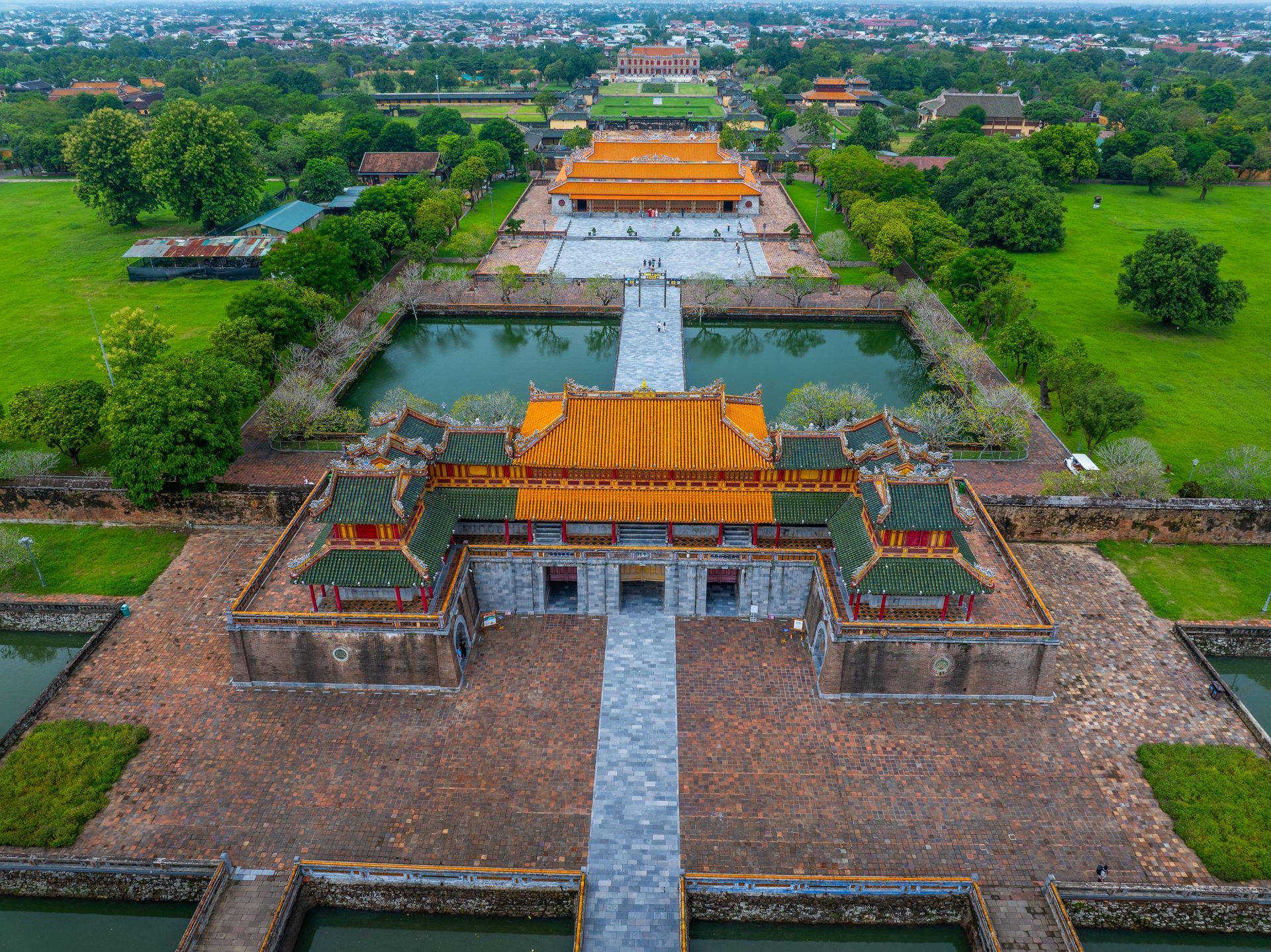
Today, the Imperial Citadel is a vital component of the Complex of Huế Monuments, officially recognized as a UNESCO World Heritage Site in 1993. Having weathered numerous historical ups and downs and wars, this magnificent structure still stands proudly, serving as a source of national pride and drawing millions of domestic and international visitors every year.
2. Architectural scale and unique features
The overall layout of the Imperial Citadel is nearly square, featuring defensive walls nearly 10 kilometers in circumference, 6.6 meters high, and 21 meters thick. Its front facade curves gracefully to follow the natural flow of the Perfume River.
- Feng Shui Philosophy: The entire architectural framework—ranging from the Outer Citadel, the Imperial City, to the Forbidden Purple City—faces south, following traditional Eastern philosophies. This orientation symbolizes peace, stability, and supreme imperial rule.
- Gate System: The citadel features a total of 13 entry gates (including 11 land gates and 2 waterway gates via canals). Among the most famous are Thượng Tứ Gate, Hòa Bình Gate, and Cửa Ngăn, ensuring smooth connectivity with the outside.
3. Iconic landmarks not to be missed
Exploring the Imperial Citadel allows visitors to admire several peak imperial architectural masterpieces:
- The Flag Tower (Kỳ Đài): Located on the main southern side of the citadel, this historic flagstaff was built during Emperor Gia Long's reign and restored under subsequent emperors.
- Ngọ Môn Gate (The Meridian Gate): Built in 1833 during Emperor Minh Mạng's reign, Ngọ Môn is the grand primary entrance to the Imperial City. Its highlight is the Ngu Phung (Five Phoenixes) Pavilion on the upper level, which hosted major imperial events such as the Proclamation of the New Calendar and military reviews.
- The Imperial City (Hoàng Thành): The second perimeter wall enclosing over 100 historical palace structures where the royal family lived and worshipped their ancestors.
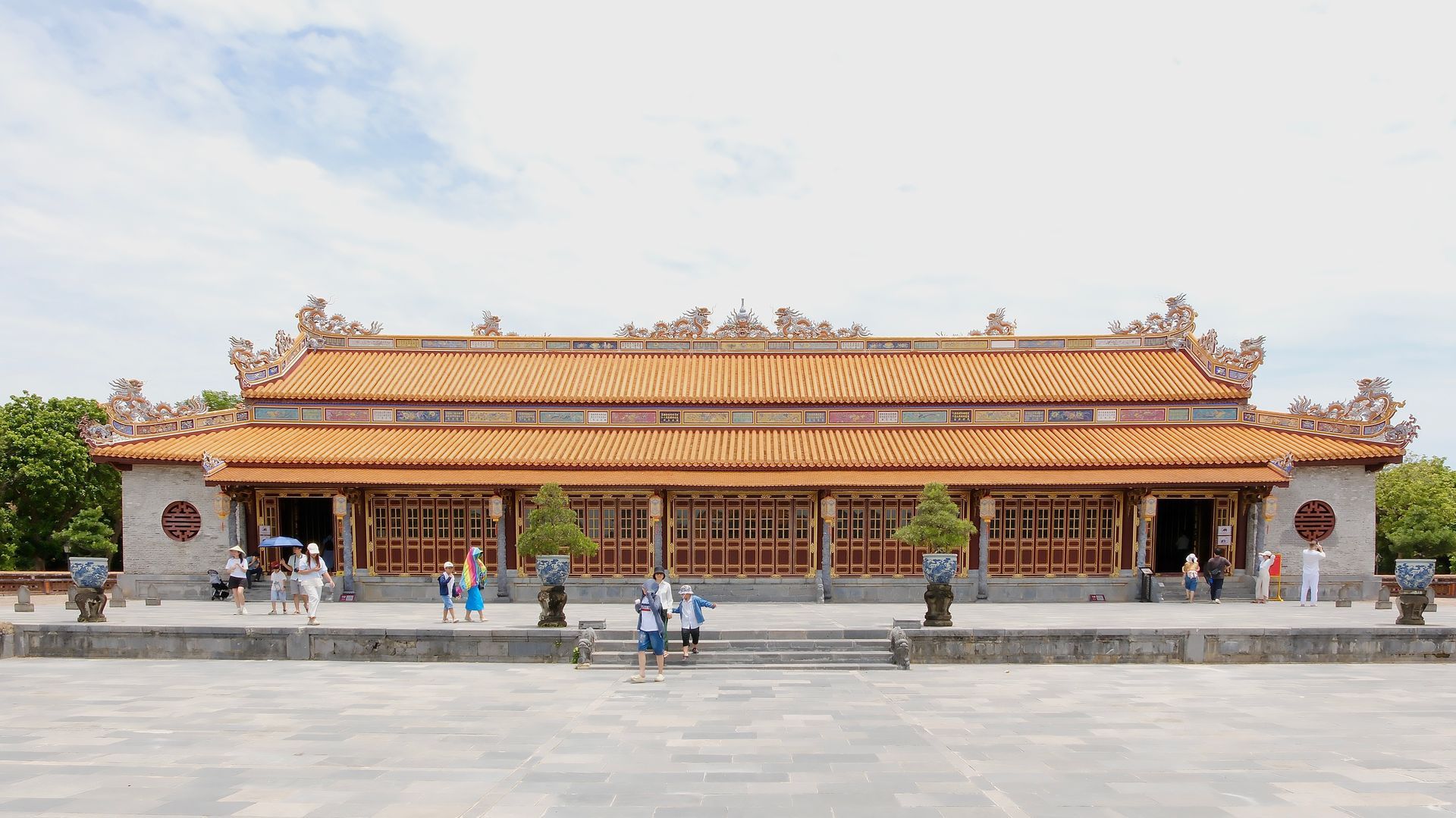
- Thái Hòa Palace: The heart of the Imperial City, housing the royal throne and hosting major court ceremonies. It features unique double-tier roof architecture (trùng thiềm điệp ốc) adorned with striking crimson and gold hues symbolizing royalty, surrounded by spacious courtyards and tranquil lotus ponds.
- The Forbidden Purple City (Tử Cấm Thành): The innermost enclosure reserved strictly as the private residence for the emperor and royal concubines.
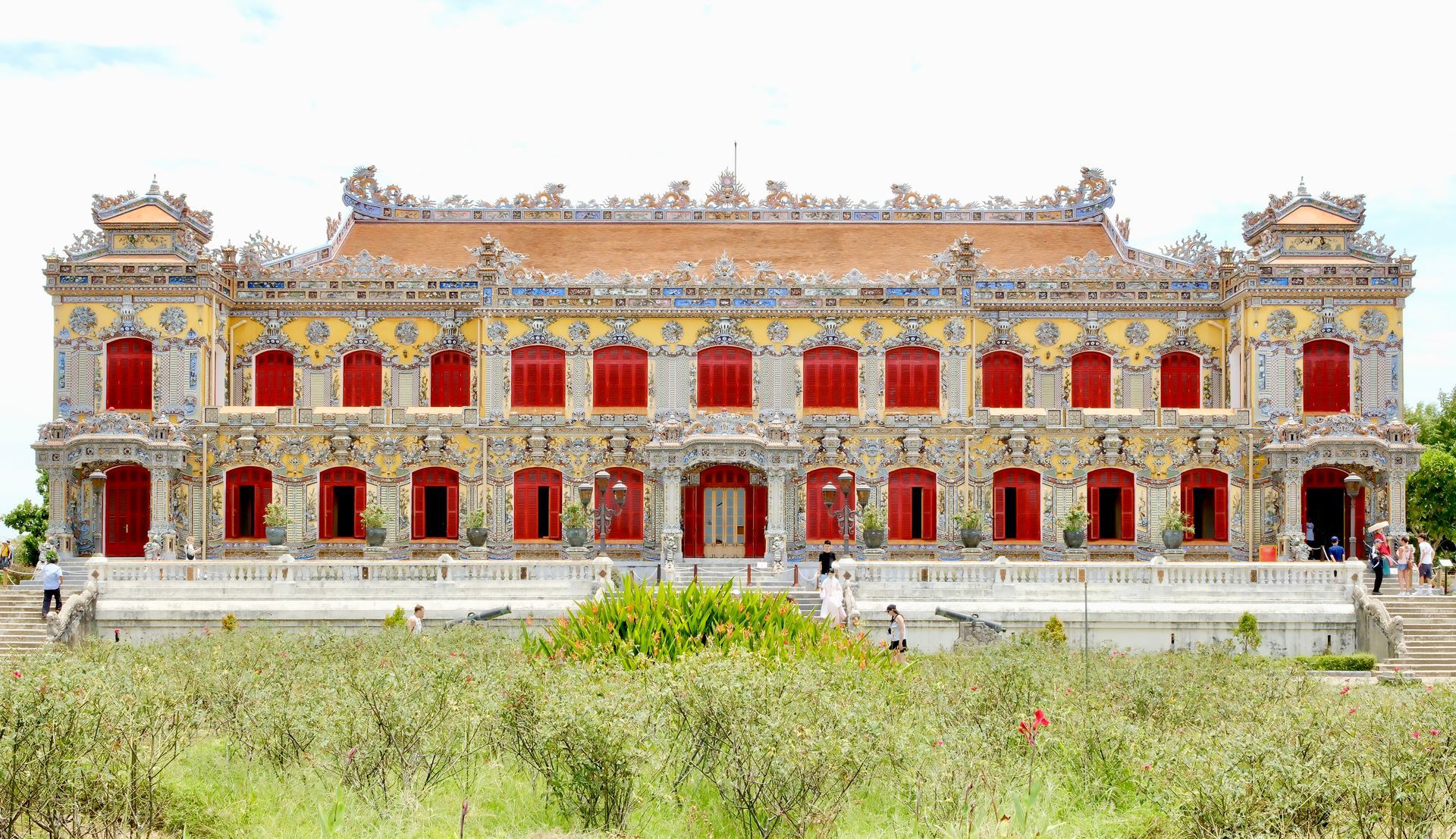
- Kien Trung Palace: is a grand architectural masterpiece that seamlessly blends traditional Vietnamese design, French colonial elements, and Italian Renaissance styles, serving as the living residence for the last emperors of the Nguyen Dynasty.
4. What Makes Traveling to the Imperial Citadel of Hue So Special?
- Admiring Architectural Masterpieces and the Nội Vụ Department
- Feature: Upon arriving at the Imperial Citadel of Huế, visitors can witness firsthand exquisite imperial architectural works crafted with meticulous and sophisticated carvings.
- Highlight: Explore the Nội Vụ Department (Phủ Nội Vụ)—a meticulously restored space dedicated to introducing and vividly recreating traditional craft industries under the Nguyễn Dynasty.
- Exploring History via Virtual Reality (VR) Technology
- Feature: Modern Virtual Reality (VR) technology allows visitors to step back in time through vivid, sharp imagery displayed right before their eyes.
- Value: This technology realistically reconstructs daily activities and solemn court rituals of the Nguyễn royal family from hundreds of years ago.
- Discovering Treasures at the Huế Royal Antiquities Museum
- Feature: The Huế Royal Antiquities Museum (located at Long An Palace) serves as a repository for thousands of rare artifacts made of ceramics, porcelain, jade, horn, bronze, and more.
- Notable Artifacts: It preserves numerous personal items used by Nguyễn emperors, such as silver tea sets, royal furniture, trays, gold-wrapped Kim Giao chopsticks, and ceremonial washbasins, providing profound insights into feudal architecture and lifestyle.
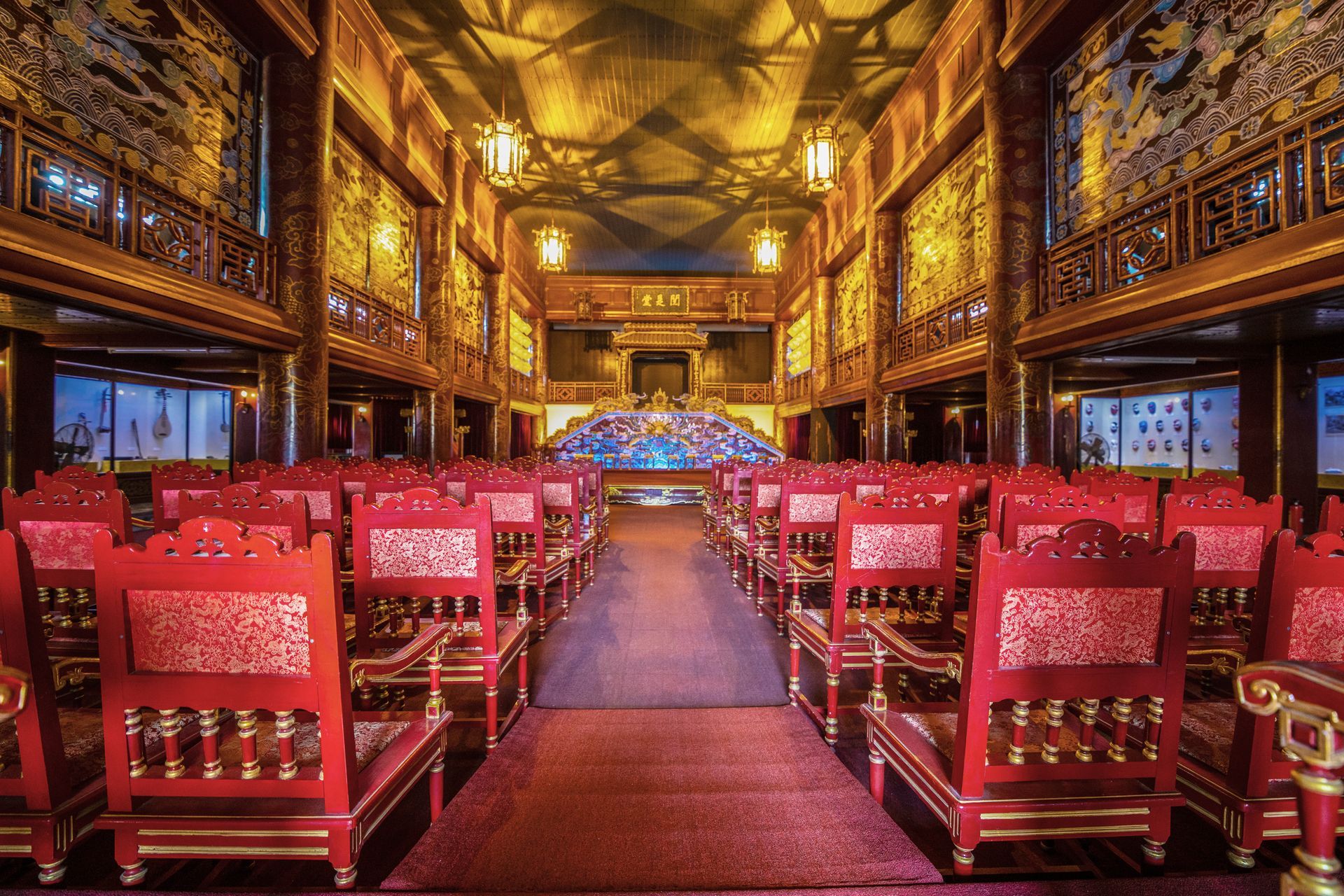
- Enjoying Royal Court Music (Nhã Nhạc) at Duyệt Thị Đường Theatre
- Venue: Vietnam’s oldest royal theatre—Duyệt Thị Đường.
- Experience: The theatre has been restored to perform top-tier intangible cultural heritage pieces for visitors, including Royal Court Music (Nhã Nhạc), royal dances, and classical Tuồng opera excerpts.
- Reference Performance Schedule: Usually held daily during fixed slots (Morning: 10:00 AM – 10:35 AM; Afternoon: 3:00 PM – 3:35 PM).
- Royal Costume Photography Experience
- Feature: A trending check-in activity highly favored by visitors exploring the imperial city.
- Experience: The Imperial City area offers costume rental and souvenir photography services, allowing visitors to transform into emperors, empresses, princes, princesses, or imperial concubines of the royal court.
5. Best time to visit Hue
- Spring (January to March): Weather is cool and pleasant, ideal for outdoor exploration and photography.
- Huế Festival (Held periodically): Visiting during this festival offers a chance to experience magnificent royal art performances and cultural reenactments.
6. How to get to the Imperial Citadel
Starting from Huế City Center:
- By Motorbike: Cross Phú Xuân Bridge and follow the route through Cửa Ngăn gate directly into the citadel. The journey takes approximately 15 to 18 minutes.
- By Car: Head west toward Hà Nội Street, bear right across Phú Xuân Bridge, and turn directly into Cửa Ngăn (the shortest driving route, taking about 5 minutes).
You can join 1-day tour which has private car and tour guide with your group:
List of Services
-
From Da Nang/Hoi An/Hue: Hue Explore Royal Tombs & Pagoda Private TourList Item 1
A Journey Through History and Culture in the Last Imperial Capital of Vietnam! On this tour, you will efficiently explore Hue’s historical landmarks and cultural heritage sites.
-
From Da Nang - Scenic railway ride, Hue Heritage sightseeingList Item 2
The Heritage Rail service, linking Da Nang and Hue across Central Vietnam, transforms travel time into a special experience, showcasing the region's magnificent natural and cultural heritage.
7. Essential visitor tips and practical guidelines
To ensure a complete and pleasant visit, keep these practical tips in mind:
- Updated Ticket Prices:
- Adults: 150,000 VND / person / visit.
- Children (ages 6 to 12): 30,000 VND / child / visit.
- Opening hours: for visiting the Imperial Citadel of Hue vary between two seasonal schedules (summer and winter):
- Summer: 6:30 AM – 5:30 PM
- Winter: 7:00 AM – 5:00 PM
- Dress Code and Footwear: The Imperial Citadel is a deeply sacred historical and cultural site. Therefore, visitors must strictly avoid revealing clothing (such as tank tops or short shorts); opt for modest trousers like jeans or joggers. Furthermore, because the citadel grounds are massive and require hours of continuous walking, wearing supportive sneakers instead of high heels is strongly advised to protect your feet.
The Hue Citadel stands as a breathtaking cornerstone of Vietnamese heritage and an essential stop on your travels. We hope this information enriches your journey. Reach out to our team to book a curated trip and discover the profound beauty of the Imperial City of Hue.